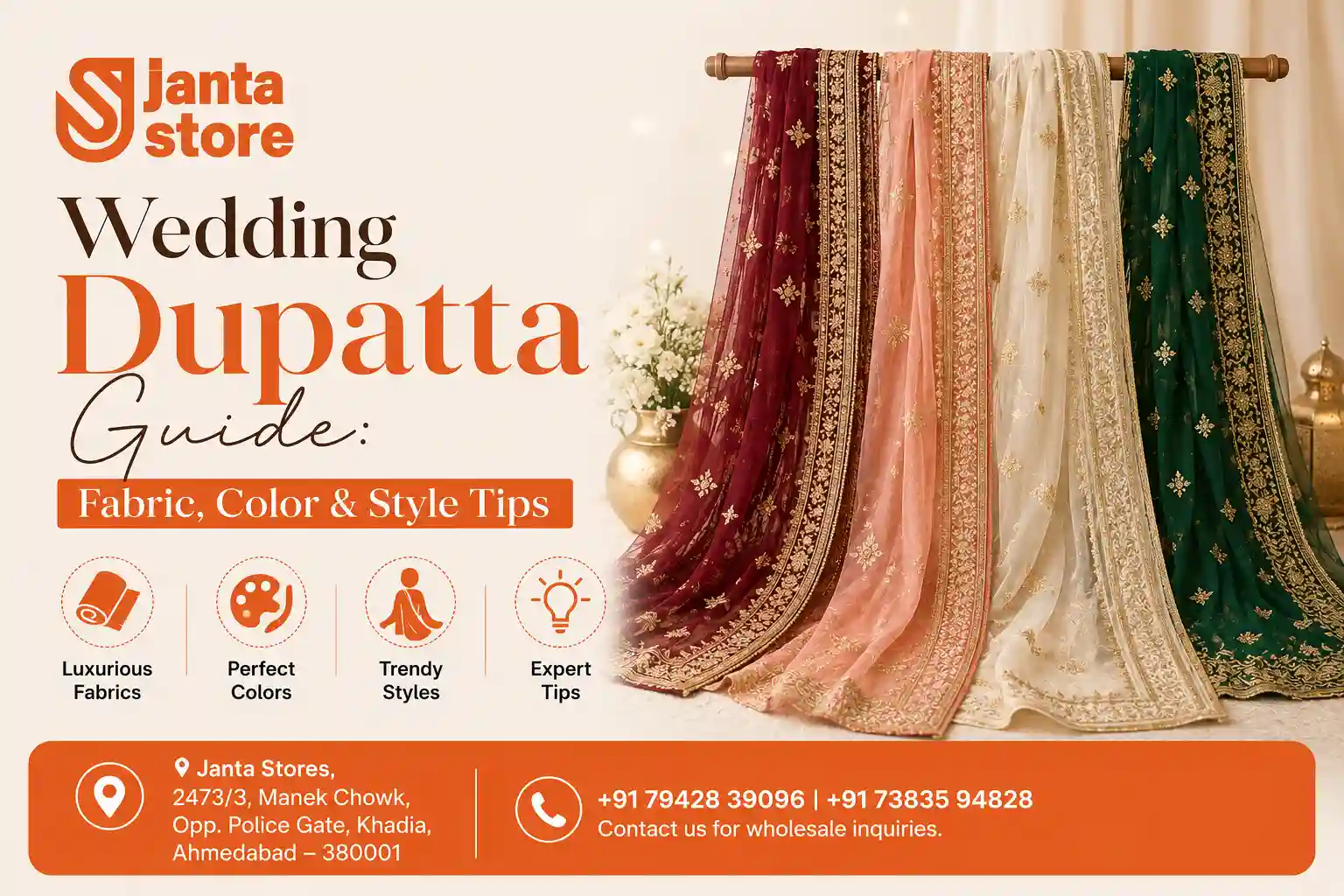
A wedding outfit is never complete without the right dupatta. It’s often the piece that ties the whole look together, draped over the shoulder, styled over the head, or layered across a lehenga. But choosing the right one isn’t just about picking a pretty design off the shelf. Fabric, colour, and styling all need to work together, especially for an occasion where the outfit is going to be photographed, worn for hours, and remembered for years.
At Janta Stores, fabric trading has been our business since 2017, and dupattas, whether sold as part of a dhoti-dupatta set or as standalone pieces, are one of the categories we get asked about the most, especially during wedding season. Here’s what we tell our customers.
1. Start With the Fabric, Not the Design
It’s tempting to fall in love with a design first, but fabric decides how the dupatta will actually feel and behave through the day.
- Silk — rich, structured, and ideal for the main wedding ceremony. It holds embroidery and zari work beautifully but is heavier, so it’s better suited for shorter functions.
- Cotton — lightweight and breathable, a practical choice for daytime functions like haldi or mehendi, or for regions with warmer weather.
- Net — sheer and flowing, popular for a softer, more modern drape, often layered over a heavier dupatta or worn on its own for receptions.
If you’re buying a dhoti-dupatta set like our Silk Dhoti Dupatta Set, the fabric of the dupatta is usually matched to the dhoti, so the whole outfit feels cohesive rather than mismatched.
2. Choose Colour Based on the Function, Not Just Personal Preference
Wedding functions in India typically follow a colour rhythm:
- Haldi — yellow, mustard, or bright pastels
- Mehendi — green, or multicolour prints
- Sangeet — bold jewel tones, often with heavier embellishment
- Main wedding ceremony — red, maroon, or gold remain traditional favourites, though many couples now opt for deeper tones like wine or emerald
A golden zari border, like the one on our Golden Zari Border Dhoti, pairs well with most of these colour palettes and photographs beautifully.
3. Match the Drape to the Occasion
How you style a dupatta matters as much as the fabric itself.
- Head drape — traditional for the main ceremony, especially in Gujarati and Rajasthani weddings
- Shoulder drape — a classic, versatile style that works for most functions
- Front pallu style — increasingly popular for sangeet and reception looks, giving a saree-like drape without the actual saree
A lighter net or georgette dupatta drapes more easily for front-pallu styling, while silk holds its shape better for a structured head drape.
4. Don’t Ignore Practical Comfort
Wedding days are long. A dupatta that keeps slipping off the shoulder or feels too heavy by the third function isn’t doing its job, no matter how good it looks in photos. This is why we always recommend trying the drape, not just checking the fabric on a hanger; the way a fabric falls only becomes clear once it’s actually worn.
Matching Your Dupatta With the Rest of the Outfit
A dupatta rarely works in isolation — it’s part of a larger outfit, and getting the coordination right matters as much as choosing the fabric itself. A few things worth thinking through:
- Border matching — if the main outfit has a zari or golden border, like our Golden Zari Border Dhoti, choosing a dupatta with a complementary (not necessarily identical) border creates a more put-together look than an exact match, which can sometimes look flat
- Weight balance — a heavy, embellished outfit generally pairs better with a slightly lighter dupatta, so the overall look doesn’t feel overloaded; conversely, a simpler outfit can carry a richer, more detailed dupatta
- Contrast vs tone-on-tone — tone-on-tone pairings (like gold on cream, or maroon on deep red) tend to photograph as elegant and subtle, while contrasting colours (like a red outfit with a green dupatta) create a bolder, more festive look — the right choice depends on the mood of the function
Common Mistakes to Avoid When Buying a Wedding Dupatta
Over the years of supplying wedding fabric and dhoti-dupatta sets, we’ve noticed a few recurring mistakes buyers make, often under the pressure of last-minute wedding shopping:
- Buying based on a photo alone — fabric often looks different under studio lighting compared to daylight or indoor venue lighting. Always check the fabric in natural light if possible.
- Ignoring the season — a heavy silk dupatta at a summer daytime wedding can be genuinely uncomfortable to wear for hours. Match the fabric weight to the season and time of day, not just the occasion.
- Not accounting for multiple functions — buying one dupatta for the entire wedding often leads to disappointment. Different functions call for different fabrics, and having at least two or three options (a lighter one for daytime, a richer one for the main ceremony) works far better.
- Overlooking fraying or loose threads at the border — this is a common quality issue with mass-produced dupattas, especially those with heavy embroidery. Always check the border edges closely before finalising a bulk order.
- Not checking the length before stitching plans — if the dupatta needs to be paired with a specific draping style, confirm the length matches what that style requires, since a shorter dupatta limits your styling options.
Wedding Dupattas for Retailers: What to Stock Up On
If you’re a retailer stocking up for wedding season rather than an individual buyer, the approach shifts slightly. Based on what we see move fastest in our wholesale orders each season, a balanced inventory usually includes:
- A strong base of silk dupattas in traditional red, maroon, and gold, since these remain the most requested colours for the main ceremony
- A reasonable stock of lighter net and georgette dupattas for daytime functions and younger buyers looking for a more modern drape
- A few premium, heavily embellished pieces for customers specifically shopping for the main wedding day
- Matching dhoti-dupatta sets, which continue to be a convenient, ready-to-wear option for customers who don’t want to coordinate pieces separately
Stocking across this range, rather than concentrating on just one fabric type, tends to serve a wider range of customers walking in during wedding season.
Buying Tip From Our Experience
Over the years of supplying dhoti-dupatta sets to retailers and families directly, we’ve noticed one common mistake: buyers focus entirely on the dupatta’s embroidery and forget to check how well it matches the weight and shade of the outfit underneath. A dupatta should complement the main outfit, not compete with it. When in doubt, go one shade lighter or darker than the primary outfit rather than matching it exactly — it creates a more balanced, photograph-friendly look.
Explore Our Collection
You can browse our dhoti-dupatta sets, including the Honda Cotton Dhoti Dupatta Set and Silk Dhoti Dupatta Set, on our shop page. For custom colours, bulk wedding orders, or specific fabric requirements, reach out to us directly.
📍 Janta Stores, 2473/3, Manek Chowk, Opp. Police Gate, Khadia, Ahmedabad – 380001
📞 +91 79428 39096 | +91 73835 94828 Contact us for wholesale and bulk wedding orders.
FAQs
Q: What is the standard length of a wedding dupatta?
A: Most wedding dupattas range between 2.25 to 2.5 metres, though this can vary based on the draping style preferred.
Q: Is silk or net better for a wedding dupatta?
A: Silk works best for the main ceremony where structure and richness matter. Net is better suited for lighter, more flowing looks during receptions or daytime functions.
Q: Can I get a dupatta made to match my dhoti or outfit exactly?
A: Yes, for bulk or custom fabric matching, it’s best to contact us directly so we can guide you on available fabric and colour options.